
A PET-CT scan combines two state-of-the-art imaging technologies: PET (Positron Emission Tomography)- a nuclear medicine exam and CT (Computerized Tomography)- an X-ray exam into a single scan.
PET CT Scan is widely useful in diagnosing and staging cancer, heart disease and neurological disorders. A PET CT scan merges both technologies to quickly provide a high-quality image of both body form and function.
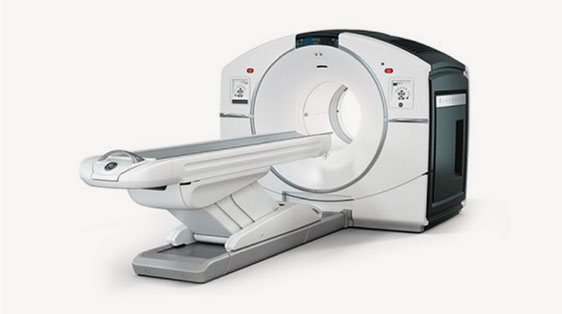
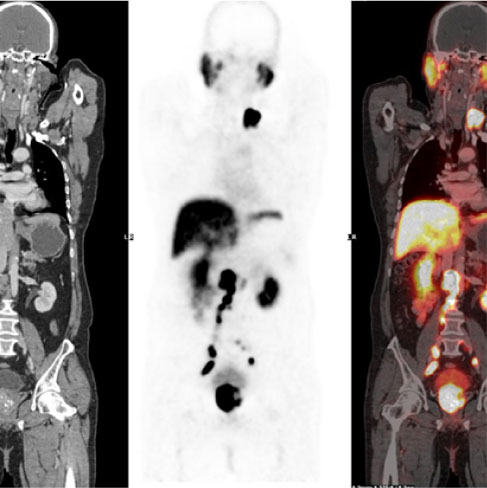
PET scan is a nuclear medicine technique, which produces images of the human body’s function at a molecular level. Usually, it is a whole-body scan or regional scan, e.g. brain, or cardiac scan. PET CT Scan machine uses radiopharmaceuticals or “radiotracers” which are labelled with isotopes, e.g. Fluorine.
These radioisotopes act like molecular probes which seek out disease in the body while giving signals which are captured to produce an image while scanning under a PET-CT scanner. PET can thus often reveal much more about the cellular level dynamics of disease than any other modalities like ultrasound, CT or MRI.
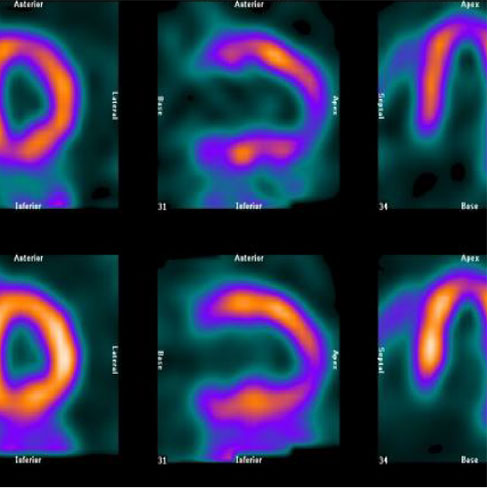
A Cardiac PET scan is noninvasive imaging of the heart by injecting a radiotracer into the peripheral vein. A cardiac PET scan is useful for the assessment of viable myocardium in ischemic cardiomyopathy which guides interventional and/or surgical coronary revascularization procedures. There is a unique role of PET/CT imaging for the detection of cardiac infection/inflammation e.g. sarcoid involvement and the monitoring of its response to appropriate immunosuppressive treatment.
(Rest MPI + 18F-FDG Cardiac PET)

A PET brain scan is non-invasive imaging of the brain by injecting radiotracer into the peripheral vein. Brain PET is useful for early diagnosis of neurodegenerative disorders (e.g. Alzheimer’s disease), movement disorders (e.g. Progressive supranuclear palsy), imaging neuroinflammation and looking for epileptogenic focus.
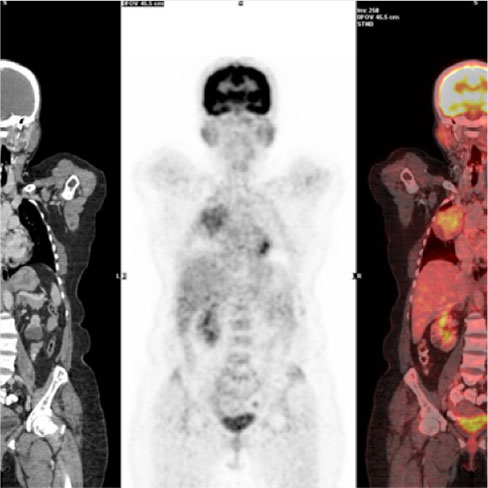
PSMA (Prostate-Specific Membrane Antigen) is a membrane glycoprotein that is an over-expressed manifold in prostate cancers and the expression increases with tumour aggressiveness, androgen independence, metastatic disease and disease recurrence.
PSMA PET Scan for prostate cancer is a prostate cancer-specific target diagnostic scan that provides both better sensitivity & high specificity at diagnosis for disease site localisation & improves detection at an earlier time point than with anatomical imaging techniques even at low PSA levels.
PET-CT can help physicians detect, diagnose and evaluate treatment for diseases such as cancer, heart attack and neurological disorders. Rapid, more accurate imaging improves the ability to find and treat problems early on, when treatment can be most effective.
Blood test: S. Creatinine report done no later than two weeks before.
Diet Instructions-
6-8 Hours Prior to Your Appointment:
Day of Appointment:
The FDG Tracer
Scanning
Stay connected with Infocus Diagnostics for expert health tips, exclusive offers, and the latest updates in diagnostic care. Join our growing community and be the first to know how we’re making healthcare more accessible, accurate, and patient-focused — one post at a time.
Radiology – 7969027277
Pathology – 9099088948
helpdesk@infocusdiagnostics.com
Navrangpura 45/B, Swastik Society, Opp. Vipul Dudhiya, Stadium-Commerce Six Roads, Navrangpura, Ahmedabad-380009.