
Elastography is a medical imaging technique that is used to evaluate the elasticity or stiffness of tissues in the body. It is based on the principle that different tissues have different levels of stiffness, and this property can be used to distinguish between normal and abnormal tissues.
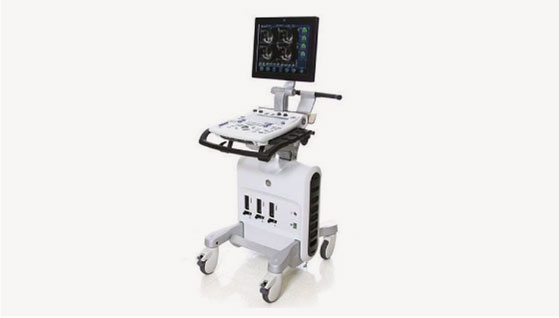
Ultrasound elastography: Ultrasound elastography is commonly used to evaluate the liver, breast, prostate, and thyroid gland, as well as other organs and tissues. It can be used to detect abnormalities such as fibrosis, inflammation, or cancer, and to monitor the effectiveness of treatment.
Magnetic resonance elastography (MRE): This technique uses magnetic resonance imaging (MRI) to create images of tissues while they are subjected to mechanical vibration. The tissue stiffness can then be calculated from the resulting images.
Other terms: liver elastography fibroscan, breast elastography
Elastography is used to evaluate the stiffness or elasticity of tissues, helping detect liver fibrosis, tumors, muscle injuries, and other abnormalities. It’s especially useful in assessing liver and breast health.
No, elastography is a non-invasive and painless imaging test. It feels similar to a regular ultrasound or MRI, depending on the type used.
Preparation depends on the area being scanned. For liver elastography, fasting for a few hours may be required. Your doctor will give you specific instructions beforehand.
Yes, elastography is very safe. It does not involve radiation and is well tolerated, even by sensitive patients like children or those with chronic conditions.
Ultrasound elastography uses sound waves and is more common for organs like the liver and breast. MRI elastography uses magnetic fields and provides more detailed images, especially useful in complex cases.
Stay connected with Infocus Diagnostics for expert health tips, exclusive offers, and the latest updates in diagnostic care. Join our growing community and be the first to know how we’re making healthcare more accessible, accurate, and patient-focused — one post at a time.
Radiology – 7969027277
Pathology – 9099088948
helpdesk@infocusdiagnostics.com
Navrangpura 45/B, Swastik Society, Opp. Vipul Dudhiya, Stadium-Commerce Six Roads, Navrangpura, Ahmedabad-380009.