
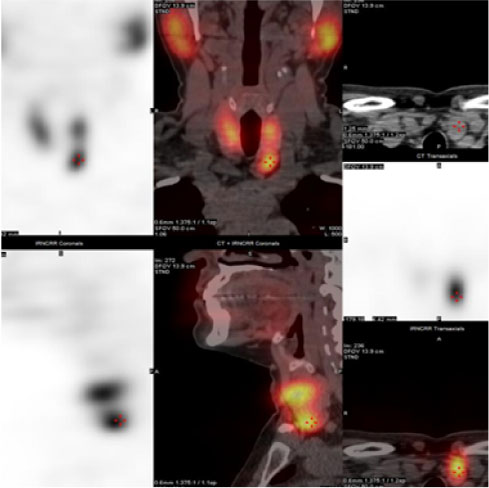
Nuclear medicine uses small amounts of radioactive material called radiotracers (radiopharmaceutical materials) to diagnose, evaluate, and treat various diseases. These radiotracers act like probes by giving signals in form of gamma rays which are captured to produce an image while scanning under a machine called a gamma camera.
Gamma cameras are commonly used in nuclear medicine procedures to visualize the heart, brain, thyroid gland, and other organs and tissues. They are also used to evaluate blood flow and to diagnose conditions such as heart disease, cancer, and infections. These images are useful to diagnose the disease or to know the function of various organs.
Nuclear medicine technology is also useful to treat certain diseases, e.g. thyrotoxicosis or carcinoma thyroid with radioactive iodine.

Yes. The radiotracers used are low-dose and safe. Radiation exposure is minimal and comparable to or less than many standard imaging tests.
Preparation depends on the type of scan. You may be asked to fast or avoid certain medications. Our team will provide specific instructions based on your test.
You’ll receive a small dose of radiotracer (usually via injection). After a short waiting period, the gamma camera will take images. The process is painless and may take 30–90 minutes.
Yes, most patients can return to normal activities immediately. Drinking plenty of fluids helps flush the radiotracer from your system.
Side effects are extremely rare. The radiotracer typically exits the body naturally within 24 hours.
Stay connected with Infocus Diagnostics for expert health tips, exclusive offers, and the latest updates in diagnostic care. Join our growing community and be the first to know how we’re making healthcare more accessible, accurate, and patient-focused — one post at a time.
Radiology – 7969027277
Pathology – 9099088948
helpdesk@infocusdiagnostics.com
Navrangpura 45/B, Swastik Society, Opp. Vipul Dudhiya, Stadium-Commerce Six Roads, Navrangpura, Ahmedabad-380009.